

Have you ever clicked an ad on your phone and ended up on a site that wouldn’t load? You pinch to zoom, sideways scroll, and just give up. That’s the pain of a landing page that isn’t optimized for mobile and is what’s killing your PPC performance.
In a mobile-first world, where more than 60% of ad clicks are on a smartphone, meaning a landing page that looks great and functions well on mobile is not only not a luxury but a necessity.
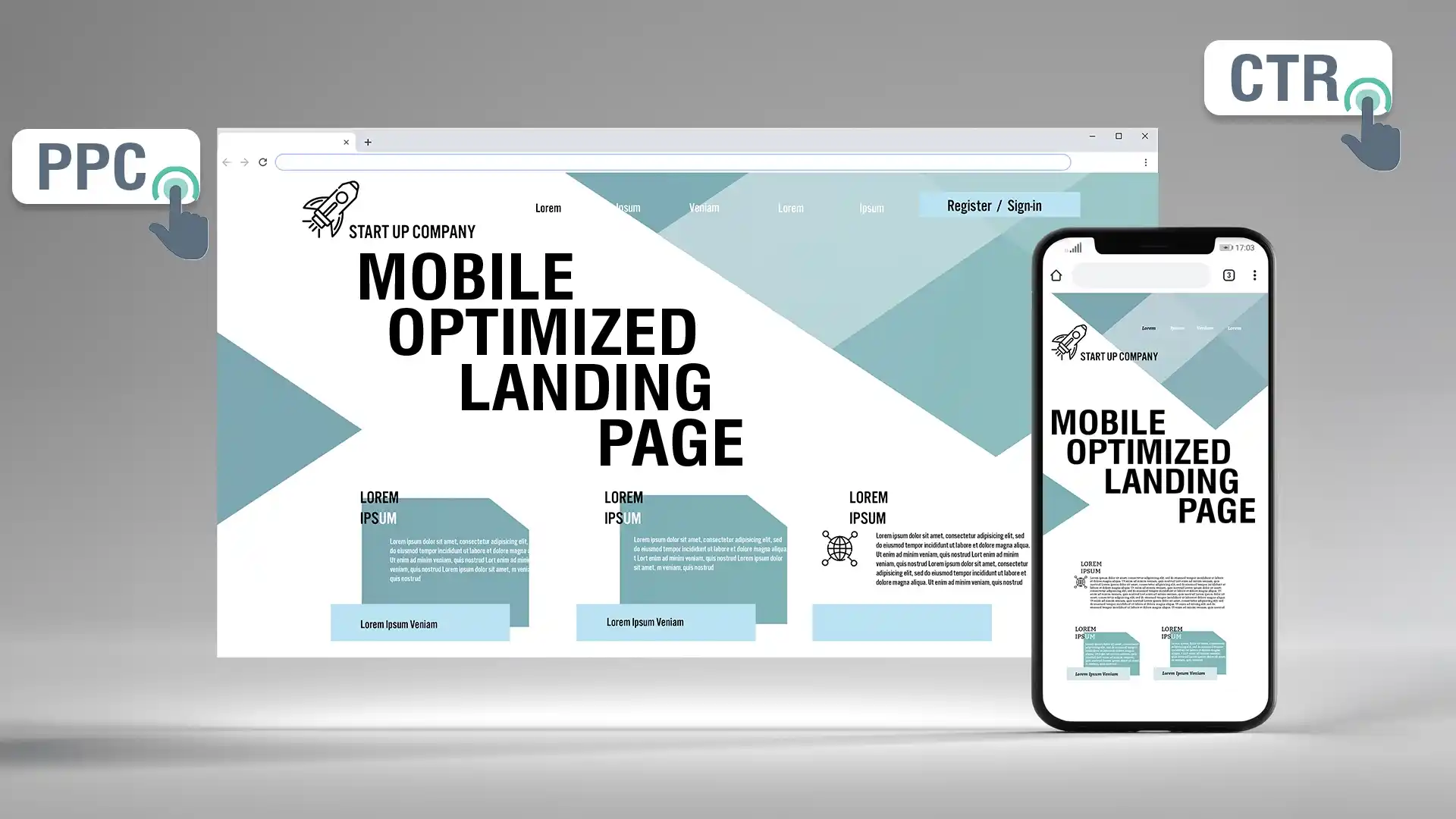
A mobile Optimized Landing Pages is a landing page specifically designed for users on a mobile device. A mobile landing page is not just a smaller version of your desktop site but is built for the way that our audience is browsing on a phone.
Think of it as a sleek, fast, distraction-free experience that is designed for one and only one goal: sign up, buy, or download. The buttons are bigger, forms are shorter, and content is thumb-scroll optimized.
People don’t just “go online” anymore they live online, and their phones are the gateway. According to Google, more than 70% of users access the internet primarily via mobile devices.
If your PPC ads are reaching these users (and they are), sending them to a clunky desktop-style page is like inviting them to a party that’s still under construction.
User experience (UX) is the most critical factor for converting your PPC campaign. Mobile users want their experience to be fast, simple and intuitive.
A smooth user experience, means no pinching, zooming or scrolling and the message is purposeful, the imagery is crisp, and the CTA is clearly established.
Here’s the cold truth: 53% of mobile visitors abandon a page that takes more than 3 seconds to load.
A slow-loading page doesn’t just frustrate users it also hurts your PPC Quality Score and ad ranking. Optimize images, use caching, and minimize redirects to make your landing pages lightning-fast.
Responsive design ensures your landing page adjusts perfectly to different screen sizes. Whether it’s an iPhone, Android, or tablet the page should automatically resize and realign elements for easy readability.
This flexibility keeps your message clear and consistent across all devices, ensuring every click feels like a smooth journey.
On mobile, less is more. Too many links or menu options can confuse and distract users. Keep navigation minimal and focus on one clear action path.
Use sticky CTAs or floating buttons so users can take action at any point without having to scroll endlessly.
Your CTA is your money-maker make sure it’s visible, clickable, and compelling.
For desktop, “Download Now” might work. But on mobile, “Tap to Get Started” or “Call Now” can feel more immediate.
Tip: Use contrasting colors and large, thumb-friendly buttons. And make sure they’re above the fold visible without scrolling.
Mobile users don’t want to type much. The shorter your form, the better your conversion rate.
Ask only for essentials name, email, and maybe one additional field. You can always collect more details later via follow-up emails or calls.
Clean visuals, short headlines, and concise text make for powerful mobile design.
Avoid clutter, autoplay videos, and large pop-ups. Instead, use whitespace strategically to make your CTA pop.
Remember a calm page feels faster and more trustworthy.
What works on desktop might fail on mobile. Use A/B testing to compare different layouts, button colors, and CTAs.
Track metrics like:
Tools like Google Optimize and Hotjar help you see what’s really working (and what’s not).
Mobile landing pages that are optimized for mobile directly affect your PPC return on investment.
Here is how:
That’s everything is figured together, it is more conversions and less ad spend. Who does not want that?
Mobile landing pages that are optimized for mobile directly affect your PPC return on investment.
Here is how:
That’s everything is figured together, it is more conversions and less ad spend. Who does not want that?
Even with good intentions, businesses still fall into these snares:
These mistakes can cost you money and headaches.
Future Trends for Mobile Landing Pages
The future is more mobile. This includes:
Interactive content- polls, short quizzes, etc.Brands that stay ahead of these trends will dominate the PPC landscape.
Providing a mobile-friendly landing page is not an option, it’s critical to the success of your PPC campaign.
Not only are your conversions increasing with a seamless, fast, and focused experience but also improving ad performance and ROI.
If your landing page isn’t mobile-friendly yet, there is no better time to start than now, because in mobile, speed and simplicity trump everything.
ARCCS Digitals transforms ideas into powerful digital solutions that inspire and engage. We blend creativity, innovation, and strategy to drive measurable business growth.
© 2026 Arccs Digitals (OPC) Private Limited. All rights reserved.